High & Low, Stepping Away from Euphoria & Into Peace
We watch with smiles as our children race each other to find the most Easter eggs or scream with joy as they tear into one gift after another on Christmas day. I have stood anxiously amongst the crowd of parents standing on the sideline of Easter egg hunts, hoping my son was fast enough to gather enough eggs to be satisfied, worried that another kid would knock him over to get to an egg before him. Then in later years, I was anxious that my son would be the one to push over another kid. I facilitated the pinata at his birthday and watched on as kids scrambled and pushed to get the candy that had fallen. Memories of my own childhood returned of sliding into a mess of children beneath a swinging pinata; other kids sliding into me or grabbing candy that I was grabbing at. Then the euphoria afterward to “see what I got.”
I vividly remember Easter egg hunts and Christmas as a child and how they felt in the moment and left me feeling afterward. The high of it all. Then the low when there were no more gifts to unwrap or I didn’t discover the golden egg like my friend had and won $20. I’ve watched my children over the recent years more closely when we had a minimal Christmas compared to going all out for the holidays. I watched them experience the high, then the low. When we lessened the gifts and festivities, kept our celebration simple and meaningful, I saw them experience less of a high. I also saw them experience less of a low. Less melt downs over having eaten all their Easter candy or not having received one gift despite the twenty they did.
I begin to connect this in my mind with what I’ve seen and learned about addiction and brain science over the years. I’ve realized that these occasions become one big dopamine hit for kids then are followed with one big dopamine crash, leaving them unsatisfied and wanting more. I once heard a pastor speak on this very experience he saw in his grandchildren after blessing them with gifts. I remember him sharing how ungrateful they were and how seeing their greediness afterward deterred him from wanting to dote on them again. In fact, he felt regret. He went on to talk about sinful nature and how even we as adults are ungrateful and greedy and need to change. While I haven’t landed on the same conclusions as this pastor did about children and humankind, I have realized that many parents and caregivers relate to his story. Not because we are all ungrateful and greedy but because there is more happening beneath this behavior.
In fact, there’s a reoccurring pattern around holidays for many of us. We have been set up and we are setting up our children to engage in a dopamine high and crash. We are potentially even leaving them to experience confusion as to why they may be so “ungrateful” when they are struggling themselves to understand why they don’t feel as happy as they should after a fun time. Each child copes with this in their own way. I remember as a child trying to fill the void by asking for more. I even began to dread the after Christmas depression. Does this sound familiar to you? I see this in adults as well. We aren’t ungrateful or greedy. We are addicted and pacified. We are living from one dopamine hit to the next whether we are truly addictedto a substance or get a high from engaging in co-dependent relationship dynamics and doom scrolling.
There’s nothing wrong with experiencing dopamine. Dopamine is useful and necessary for our brains to function. But I am concerned with the lack of peace and contentment many of us experience in life due to living from one dopamine fix to the next. The root of most addiction is the tendency to avoid the messages of our bodies, our feelings, or inner experience via substance. No wonder we struggle to feel at rest in life. Noone can feel at rest when they aren’t at peace with their inner world.
I noticed a pattern in myself a few years ago after separating from my husband. I noticed I was living for one dopamine hit to the next. No substances. Just highs. Innocent emotional highs. I realized this was my attempt to avoid experiencing the heartache of my broken marriage. After this realization, I made it my intention to slow down and to lean into seeking deeper connections and more meaningful moments. Especially in the moments I caught myself reaching for a hit. I’ve learned to reach for myself instead. To sit with how uncomfortable my body and emotions and life in general can feel at times. This is still a discipline I have to make an effort in. It’s easier to doom scroll than feel uncomfortable feelings.
They say when someone watches pornography, the mental euphoria they experience is created by a blast of dopamine released in their brain. However, when someone experiences lovemaking with a partner in real time, they don’t receive a blast of dopamine. They experience a different hormone called oxytocin. The experience is completely different. It doesn’t leave you unsatisfied or wanting. You may experience contentment; peace. This is one reason why pornography is so addictive. But if this is what happens in the brain in example, it makes me wonder what happens in our brains in other situations. When we scroll on our phone for hours verses clicking “do not disturb” and sitting outside with ourselves or our family. I wouldn’t be surprised if there was a similar dopamine/ oxytocin trade off in our brains. It does impact the nervous system. Doom scrolling for hours to avoid feelings that our body is begging us to experience, taking in more information when we are already overloaded by our emotions. Stepping outside. Seeing the color green. Slowing. Hearing birds. Grounding. Feeling the grass beneath our feet. The breeze on our skin. Gently connecting with a loved-one.
Could we possibly be raising our kids to follow in our footsteps, unconsciously teaching them to jump from one high to the next?
From my own observations of my children, particularly around holidays and special occasions, I’ve realized there are ways to approach special moments that lead to connection and whimsy rather than the proverbial meltdown for “more.” In a previous post, I mentioned that I decided for one year not to celebrate the traditional American-Christian holidays as an attempt to center my home and ground us more deeply into connection with each other, our inner selves, and the world around us. I’ve chosen to instead, lean into the seasons with intention, to use them as an opportunity to learn and grow. I’m choosing slowness over scrambling and competing. I’m choosing presence over avoidance. I’m not saying that you have to step away from celebrating American holidays in order to do this, by all means! I’m saying that this is the path I have chosen to do this and why.
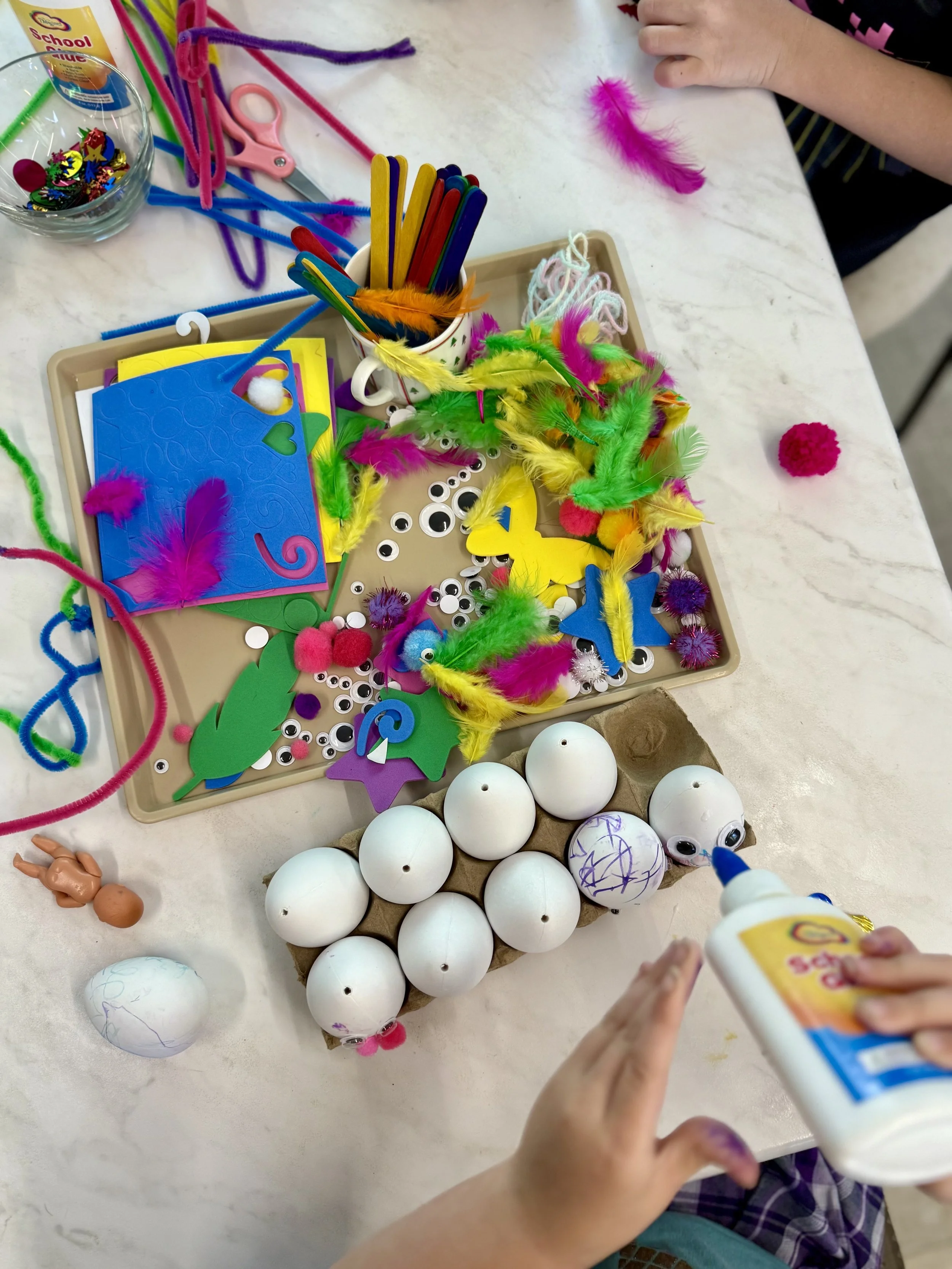
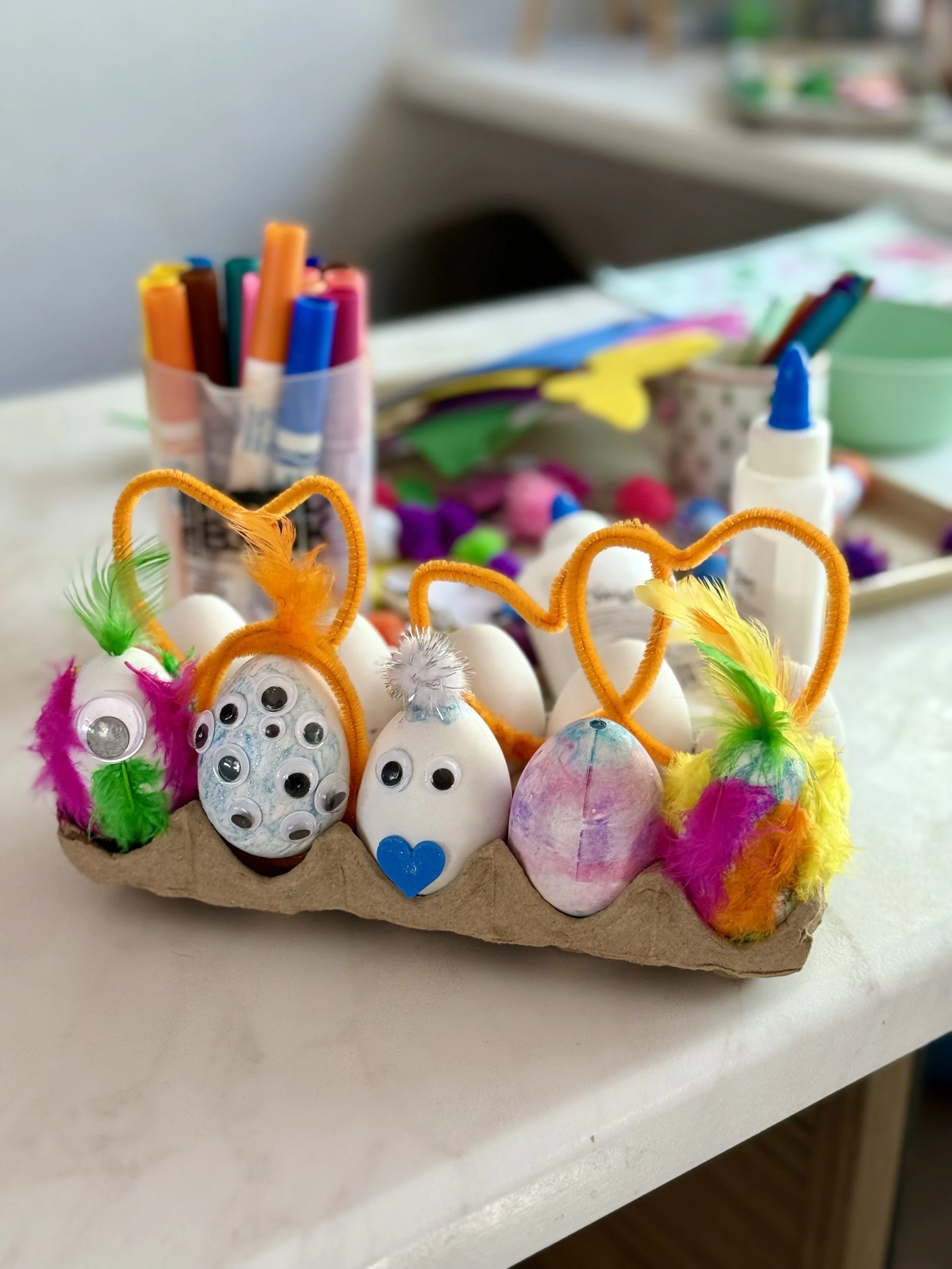
For Easter or spring celebration, I purchased white, plastic eggs. They don’t open up at all. The kids spent all week decorating them. Then we took turns hiding them and finding them. The four year old girl who joins us for pre-schooling enjoyed hiding her own, then finding them. There was no scramble. We played another game. We scooped our eggs with spoons and carried them across the meadow to dump them in a tray. Then they had to return their own eggs to their baskets from the mixed uptray.
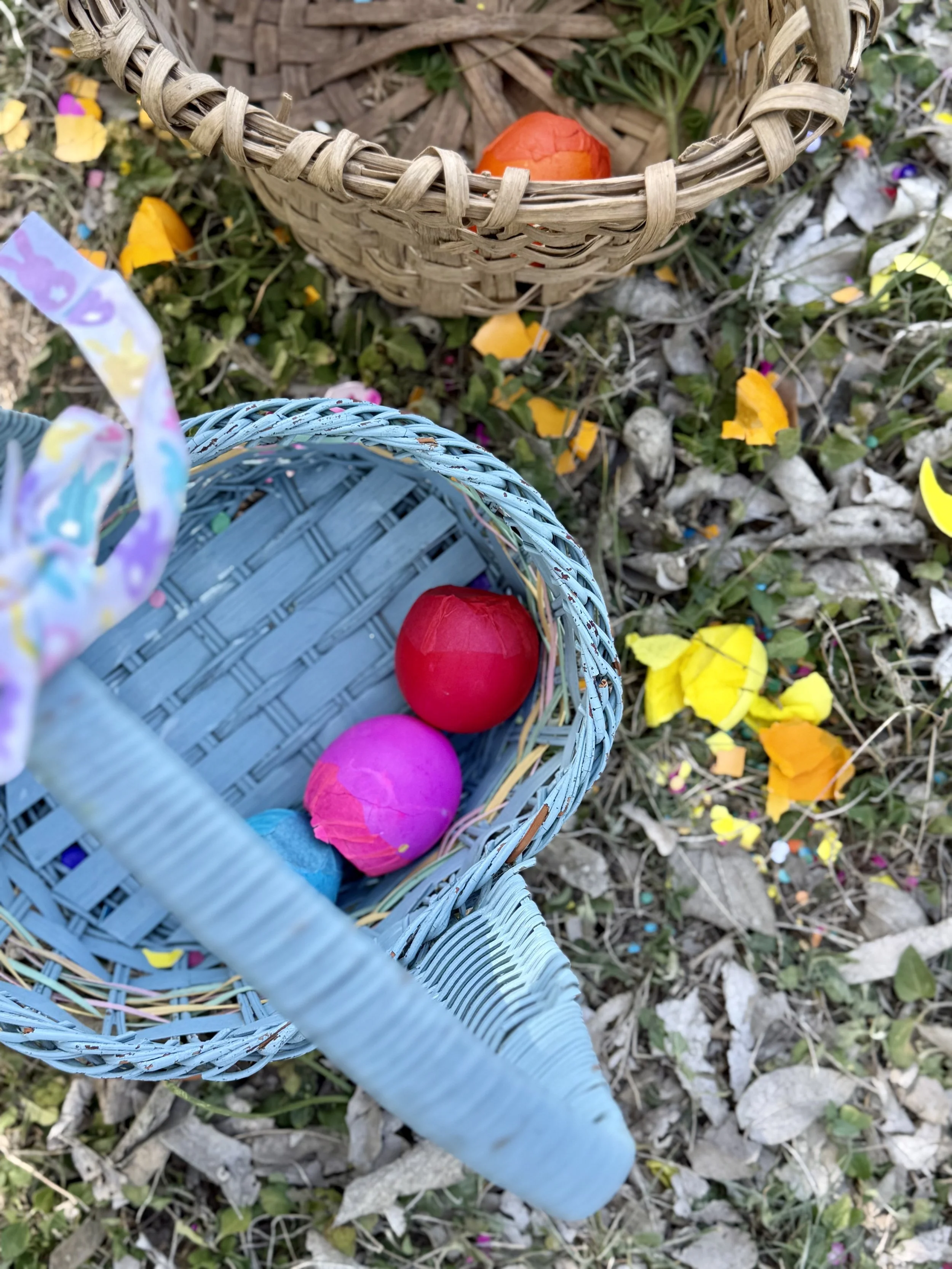
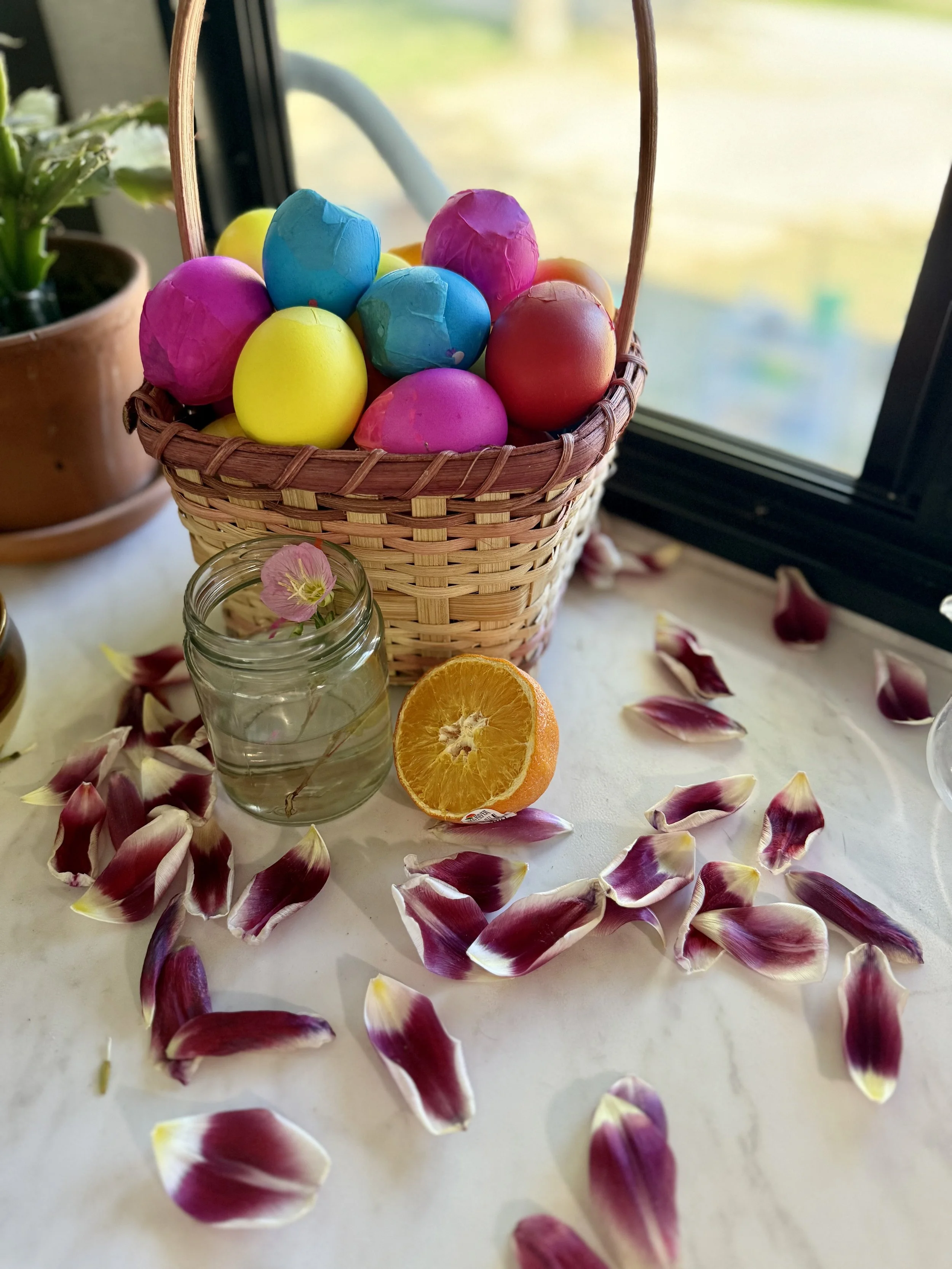
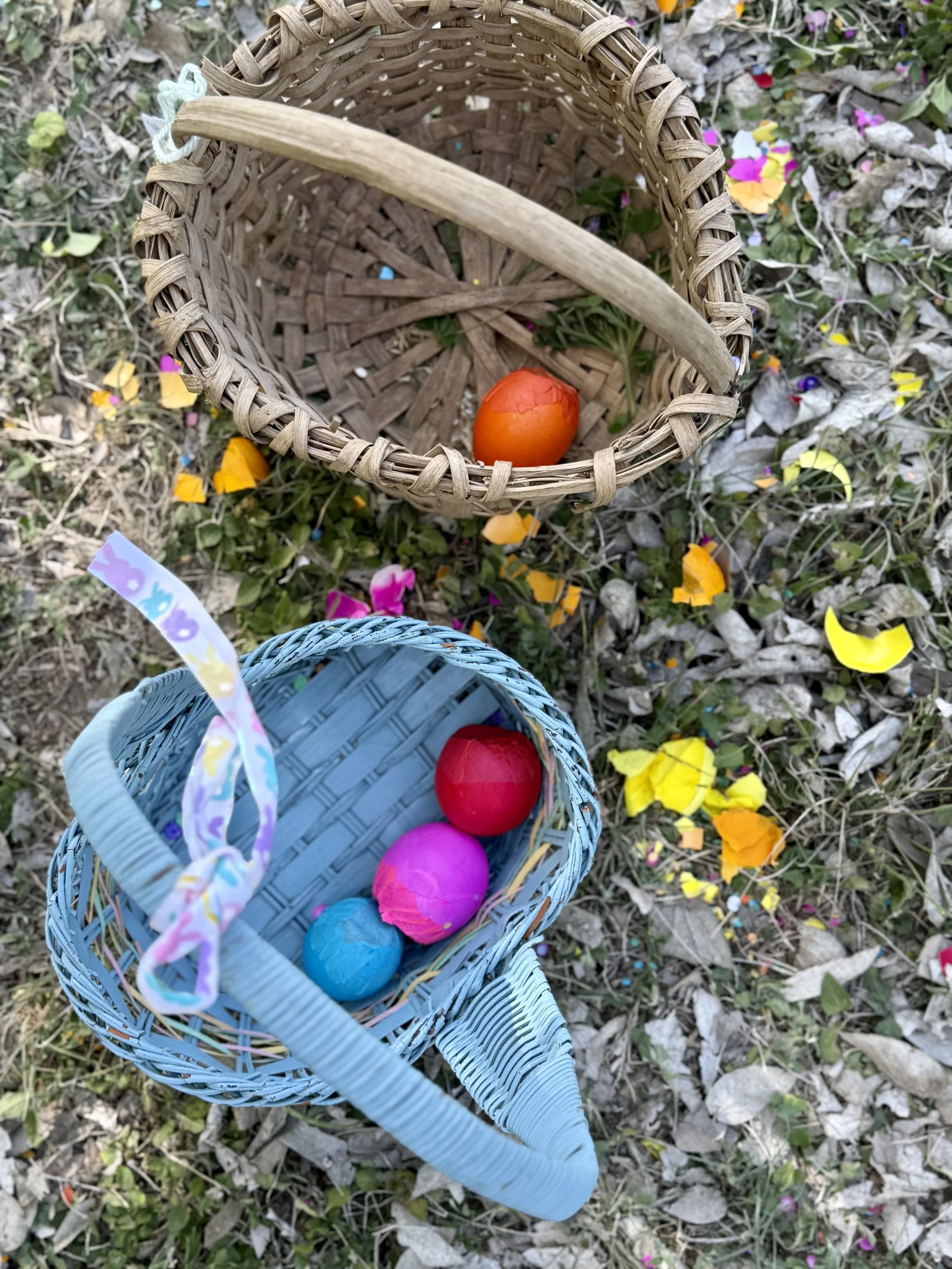
Later, I hid confetti eggs for the boys to find. I sat and watched them wander through the trees with their thrifted whicker baskets. They didn’t race. They walked side by side, talking and pointing along the way. I watched one boy pick up an egg only to give it to the other. We counted their eggs when they returned. Not to see how many each child had found, but to know if we had found them all or not. Noone mentioned the fact that one child had found more than the other before skipping off to find the missed eggs. We were invited to an Easter egg hunt at a local church. I considered attending only as an afterthought because “the boys would love that!” But would they or would it be a dopamine high and sugar crash? I decided this was enough for us. I am content. They are too.